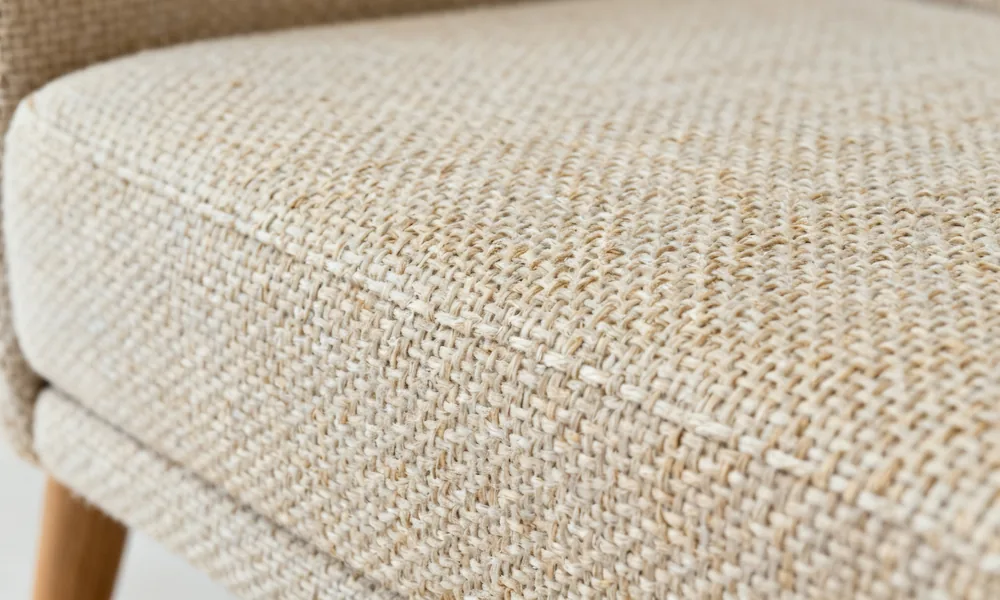
What Is PU Leather? A B2B Buyer's Guide to Getting Fabric Orders Right
If you're sourcing PU leather or luxury curtain fabric for an upholstery or drapery project, the most useful question isn't "What's the price?" It's "What's NOT included?"
That sounds backwards until you get the call.
November last year, 4 p.m. on a Tuesday. A mid-size furniture manufacturer needed 200 yards of PU leather for a boutique hotel project installing Friday morning. Their original supplier confirmed the order two days earlier, then cancelled because the "coating was out of stock." Normal lead time: 10–14 days. Time remaining: roughly 40 hours.
We found a substitute with the right backing and thickness specs, paid about $600 in expedited sourcing fees (on top of the $3,200 base cost), and delivered Thursday evening. The client spent an extra $800 on the swap but saved a $12,000 contract.
That whole crisis would have been avoidable if the original supplier had been asked one question: "What do you actually have on hand right now, no custom coating?"
I've handled 200+ rush orders at Gabriel Fabrics — a B2B wholesale supplier covering PU leather, luxury curtain fabric, and a broad range of upholstery, apparel, and technical textiles. Here's how I think about it.
What Is PU Leather, Actually? (A Definition for Buyers in a Hurry)
PU leather is polyurethane-coated fabric. It's a synthetic material — a fabric backing (usually knitted or woven polyester or a cotton blend) coated with a layer of polyurethane. It is not real leather. The name sounds related; the structure isn't. It's also not PVC leather, which uses polyvinyl chloride and tends to be cheaper, stiffer, and less environmentally favorable.
But most explanations of "what is PU leather" miss this:
PU leather quality lives in the backing and coating thickness, not in the "PU leather" label itself.
A $15-per-yard roll and a $45-per-yard roll? The difference is rarely the "PU" part. It's the backing: tighter woven vs. loose nonwoven. It's coating thickness: 0.3 mm vs. 0.8 mm. It's finishing: was it tested for flame resistance, stain performance, UV stability?
In my experience working with Gabriel's supplier network, this pattern repeats constantly: buyers ask about "PU leather" as if it's one material, when it's a whole sub-category. If you say "I need PU leather," you'll probably get something that works — but might not survive your project timeline.
Ask by application instead. For seating? Request abrasion cycles (Martindale or Wyzenbeek). For drapery? Ask about light fastness and weight. Then request the sample based on that.
Luxury Curtain Fabric: What 'Luxury' Actually Signals
Now, "luxury curtain fabric" is less regulated and more of a vibe. Generally it means: higher weight, richer texture (velvet, jacquard, heavy drape), better colorfastness, and — if you're lucky — tested flame performance.
Here's what experience has taught me: "Luxury" is often a code word for "lower fault tolerance."
A luxury velvet can destroy the light in a room if it hangs wrong. Heavy upholstery fabric is more expensive to replace. And luxury fabrics aren't stocked for immediate shipment — custom dyeing and specialty finishing add 2–3 weeks to lead times.
We supplied a curtain fabric in 2023 that checked the luxury spec boxes but had poor light fastness. A hotel room delivered within two weeks faded. We had to redo the entire order. Cost: a $3,000 rush replacement.
The lesson: always request light fastness (blue wool scale) and flame test reports in writing before you commit to a luxury fabric order. Not a verbal assurance — the actual report.
The 'Transparency' Part
I'll be direct. Transparent pricing isn't a marketing phrase — it's when the number you see is the number you pay.
The worst emergency-order situations I've been in were driven by "we quote you X" becoming "X plus rush fee, service fee, expedite fee, surcharge." One supplier's quote sheet had six line items of extra fees. I missed it. Ours has three lines. You pay what you see.
But here's the honest part: transparent doesn't mean cheapest. Sometimes a transparent quote looks 15% higher than the one with hidden fees. But once you add the buried fees, it's almost always less. And it eliminates the invoice-day stress of reconciling charges.
I don't have hard industry data on what percentage of quotes include hidden rush fees — every supplier is different. What I can say from our order records: expedite markups tend to land somewhere in the 15–40% range on base pricing. That's a wide swing, which is exactly why you need to ask before you confirm.
I still kick myself for accepting a quote last year without confirming the expedite fee in writing. We paid it, but we shouldn't have. Now I ask: "Does this quote include all expedite charges?" Specific. In writing.
When This Advice Doesn't Apply
My experience is based on roughly 200+ B2B orders across mid-range upholstery and drapery projects. If you're working on ultra-luxury specs, mega-volume, or government contracts, your requirements will differ. Testing standards are stricter in those contexts and lead times are longer.
And if you're not in a hurry, you never need to care about rush fees. Take the samples. Run the normal timeline. Nothing I've said here matters for standard lead times.
Finally: the FTC's Green Guides (16 CFR Part 260) require environmental claims like "sustainable" or "eco-friendly" to be substantiated. So when someone calls PU leather "sustainable," ask for the test data — me or anyone else. Words like "recyclable" or "green" need evidence behind them, or they're just words.
