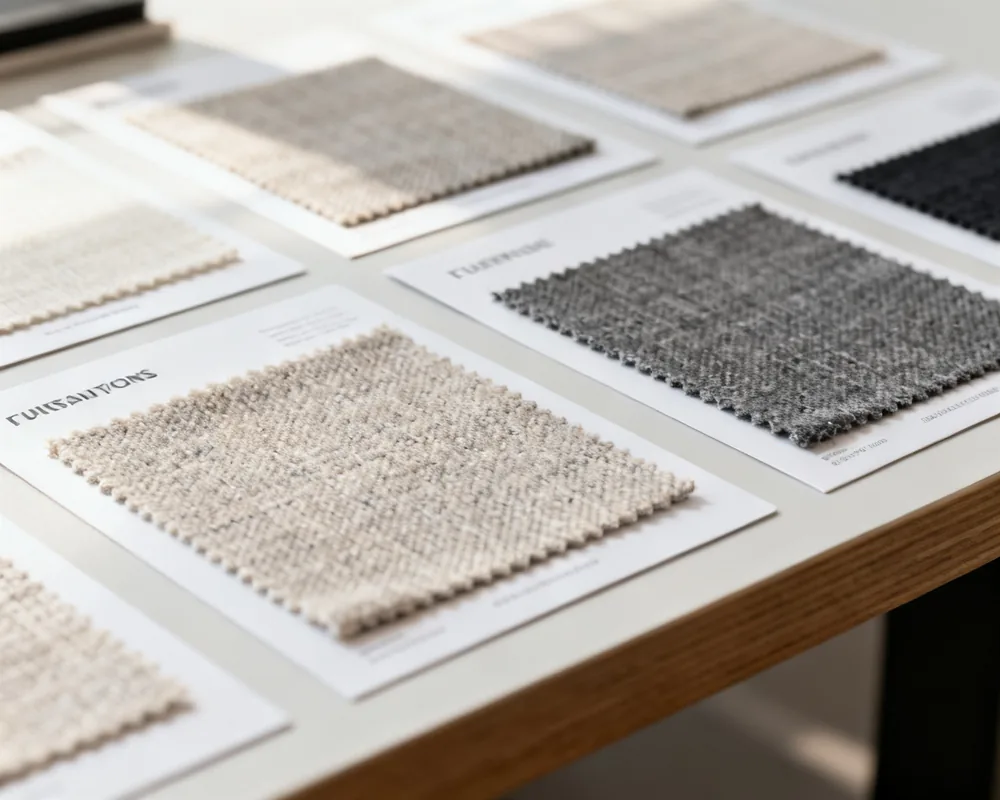
Before choosing an upholstery swatch, write one sentence about the seat and one about the person using it. A lounge form invites a different touch discussion from a compact chair around a meeting table. Include daily contact, cleaning practice, light exposure and the surrounding interior finishes. Then identify the question the sample needs to answer. This makes a shortlist more useful than a search for the highest abrasion number or the softest first impression. Compare plausible construction routes against the same brief so that the tradeoff stays visible.
Fabric selection guide — compare at least four dimensions
Dimension
Review question
Evidence or next step
Touch
Composition alone is insufficient
Review physical handle and construction
Care
Maintenance can change suitability
Describe the actual care context
Exposure
Different stresses need different evidence
Separate water, wear and light questions
Processing
Assembly affects selection
Discuss width, edges and joining
Handle the sample as information
Use a physical specimen to review handfeel, bending and the relationship between the face and backing. Hold the sample in a consistent direction, then look at it under the light planned for the interior. Note a shade reference and any pile direction. Bend it around a representative seat corner and record what the trial shows about the proposed assembly. An image cannot establish touch or approve colour, and a flat sample cannot demonstrate every curved seam. Keep the dated reference so that later discussions concern the same material state.
Compare the construction, not one label
Fiber composition, weave construction and GSM describe different parts of the textile. Request composition in percent by mass, mass per unit area in g/m² and usable width in cm; do not merge usable width with the selvedge. A denser or heavier fabric can change cutting and handling without establishing greater seating comfort. For wear evidence, compare the abrasion resistance method, endpoint and specimen conditioning. Record the standard beside the figure, such as ISO 12947-2 or ASTM D4157, and keep ISO 12945-2 pilling and ISO 13936-2 seam slippage in separate columns. Review pilling, colorfastness and seam slippage as separate questions. A result reported for another finish or backing cannot simply be carried across to the swatch being considered.
Prepare a shortlist with tradeoffs
Natural fiber options can be attractive for touch and moisture interaction; synthetic options may be considered for particular construction and care priorities. The actual yarn, weave and finish determine whether those expectations suit the seating brief. Compare an existing material reference with a custom route as a separate decision. Existing selection still needs current lot and availability confirmation, while development requires explicit sample and approval stages. Set a must-have list and a preference list, then record the question that could change the shortlist. The aim is an informed upholstery decision rather than a universal material ranking.