Furniture upholstery
Gabriel fabrics — give the seating brief a material voice
Explore furniture upholstery through touch, weave construction and colour. Bring the seating context into the conversation before reducing the choice to a single abrasion result.
Discuss your fabric requirements- First step
- Name the seat type, intended care routine and sample reference.
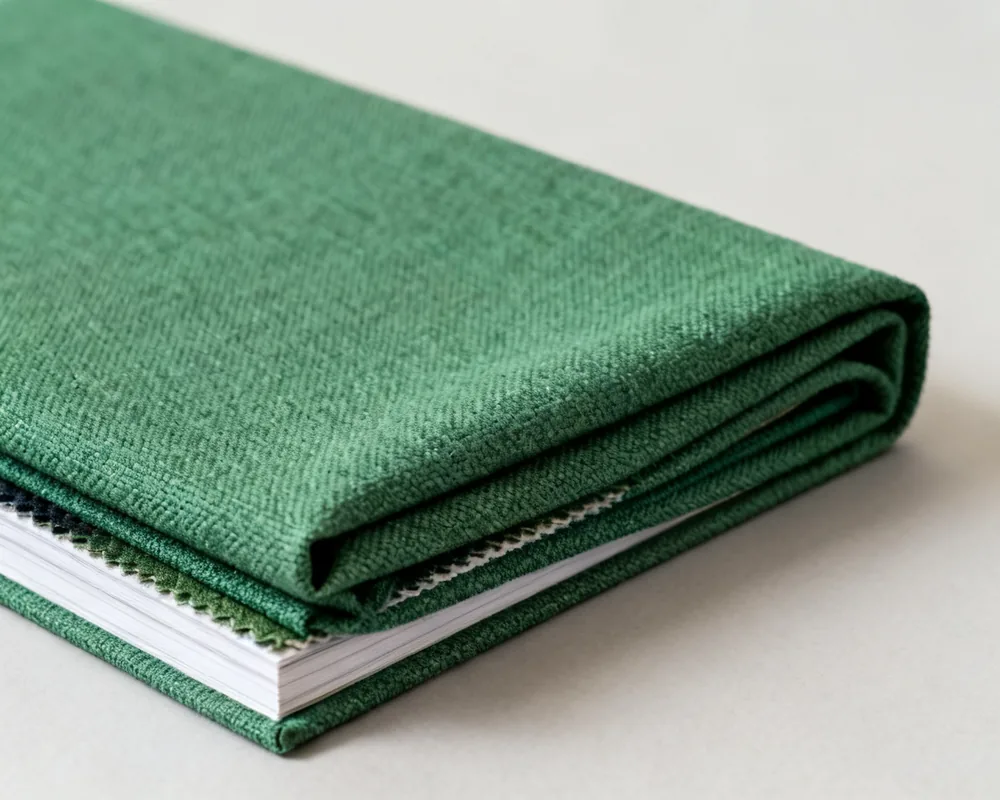
A seat is experienced through its surface
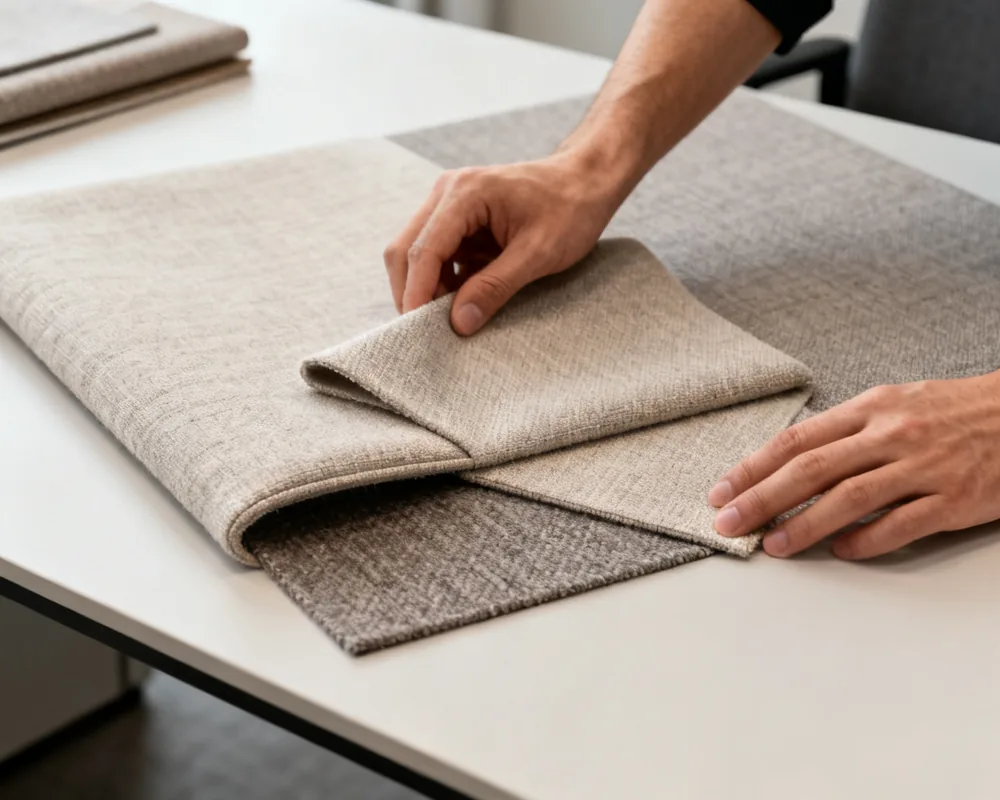
Make touch part of the specification
A lounge chair and a tightly upholstered meeting seat place different demands on the same material. Compare fiber composition with the weave construction, then bend the swatch around a representative curve. Check the balance between a soft initial touch and a surface that keeps its intended appearance. A high GSM does not establish softness or abrasion resistance; record those observations separately. If a wear number is supplied, ask whether it came from ISO 12947-2 Martindale or ASTM D4157 Wyzenbeek, because those cycle counts are not interchangeable. Request ISO 12945-2 for pilling and the applicable ISO 105 part for colorfastness, and check that a fiber declaration is given by mass and adds to 100 percent.
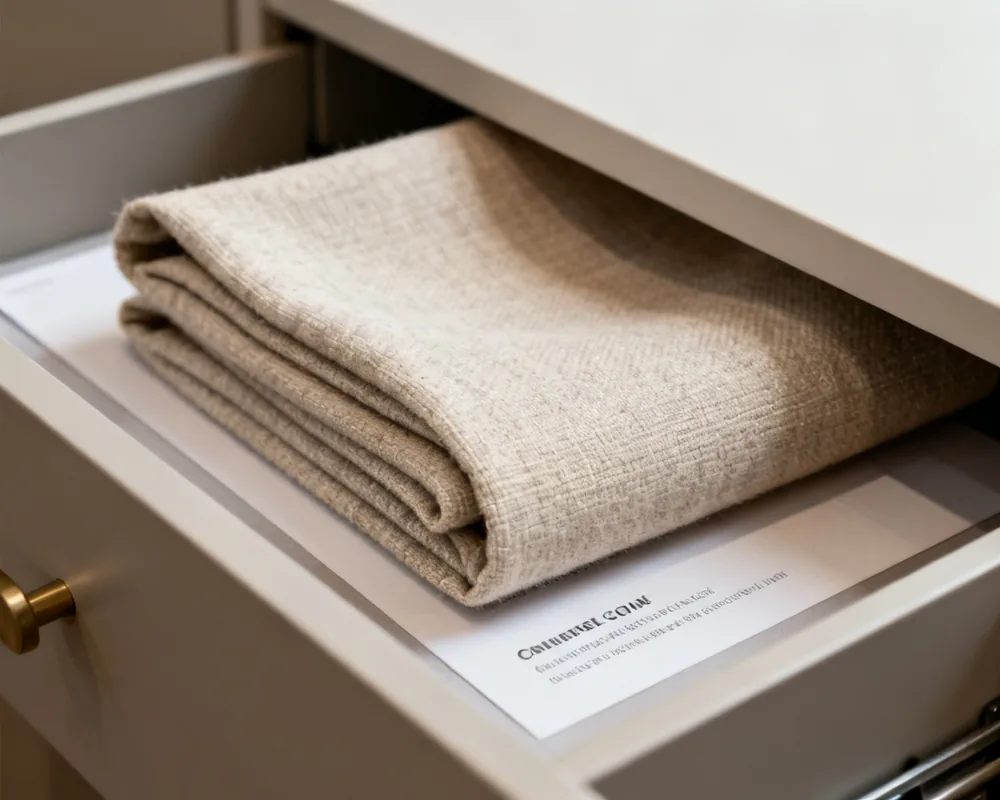
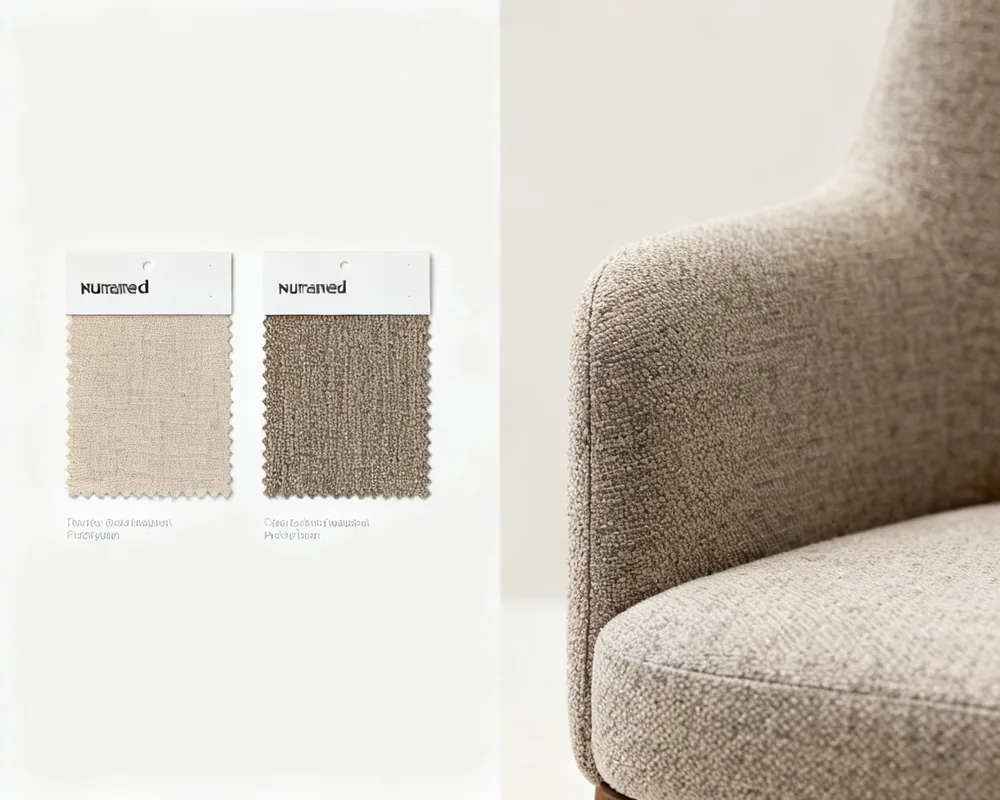
Discuss a physical sampleFurniture fabric, viewed from both sides
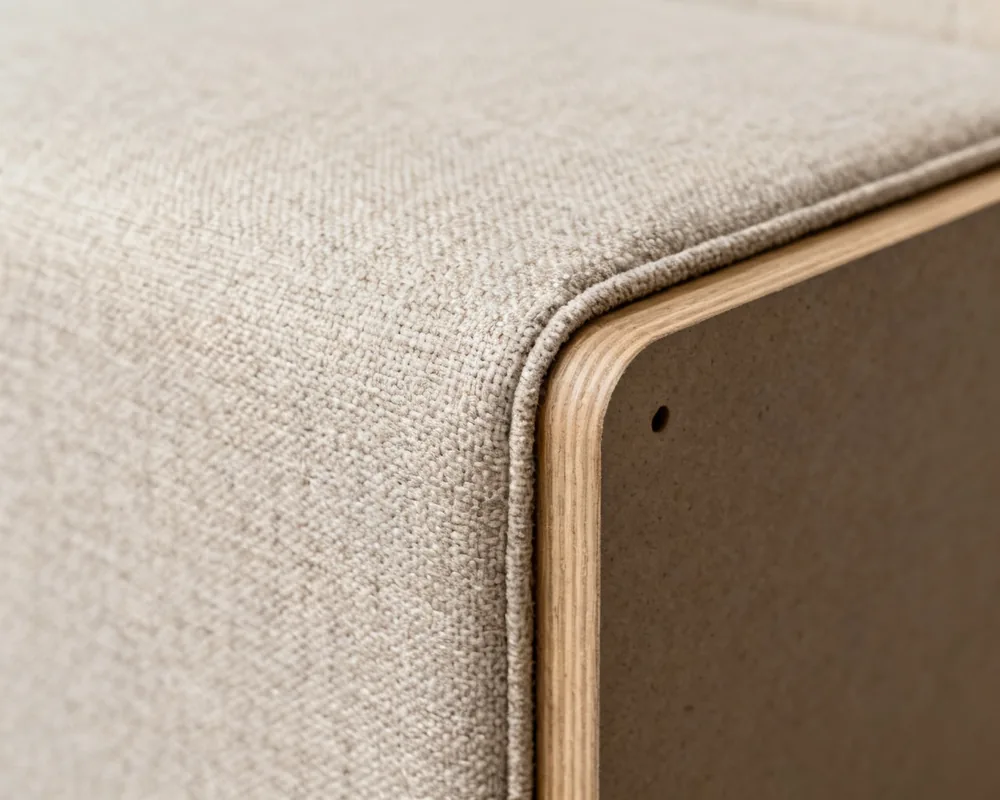
From lounge seating to contract interiors
- Environment
- Identify contact frequency, window light and the actual cleaning routine. Indoor upholstery does not automatically qualify for outdoor exposure.
- Experience
- Compare texture on the seat and back, allowing for pile direction and the way light changes across a curved surface.
- Processing
- Discuss seam placement, stretch recovery and seam slippage with the upholsterer; a flat swatch cannot establish behaviour at every seam.
Keep the sample decision visible
Define the brief
Describe the seating application, fiber composition and construction preference. Distinguish a required value from an open selection question.
Review the sample
Retain a dated swatch for shade and handfeel comparison. Request the relevant specimen conditions for abrasion resistance, pilling and colorfastness evidence.
Confirm the order context
State quantity, destination and required date for review. Ask about the proposed batch and usable width before treating a sample as the bulk approval reference.
Questions that help a seating brief
- Should the highest abrasion result decide the fabric?
- Abrasion resistance addresses a defined wear test. It does not replace pilling, seam slippage or a physical handfeel review. Compare the method and endpoint alongside the seating use rather than choosing a universal numerical winner.
- How should I describe a sample?
- Identify the reference, face direction, construction, GSM and usable width, then explain whether the sample will be used for colour, feel or upholstery trial approval.
- Can test results be compared directly?
- Match the method, specimen conditioning and finish before comparing results. Natural and synthetic fibers can both merit a shortlist: touch, care and construction determine which tradeoff is useful for the seat.